
UK Manned Guarding & Stadium Disorder: 2026 Operational Insights
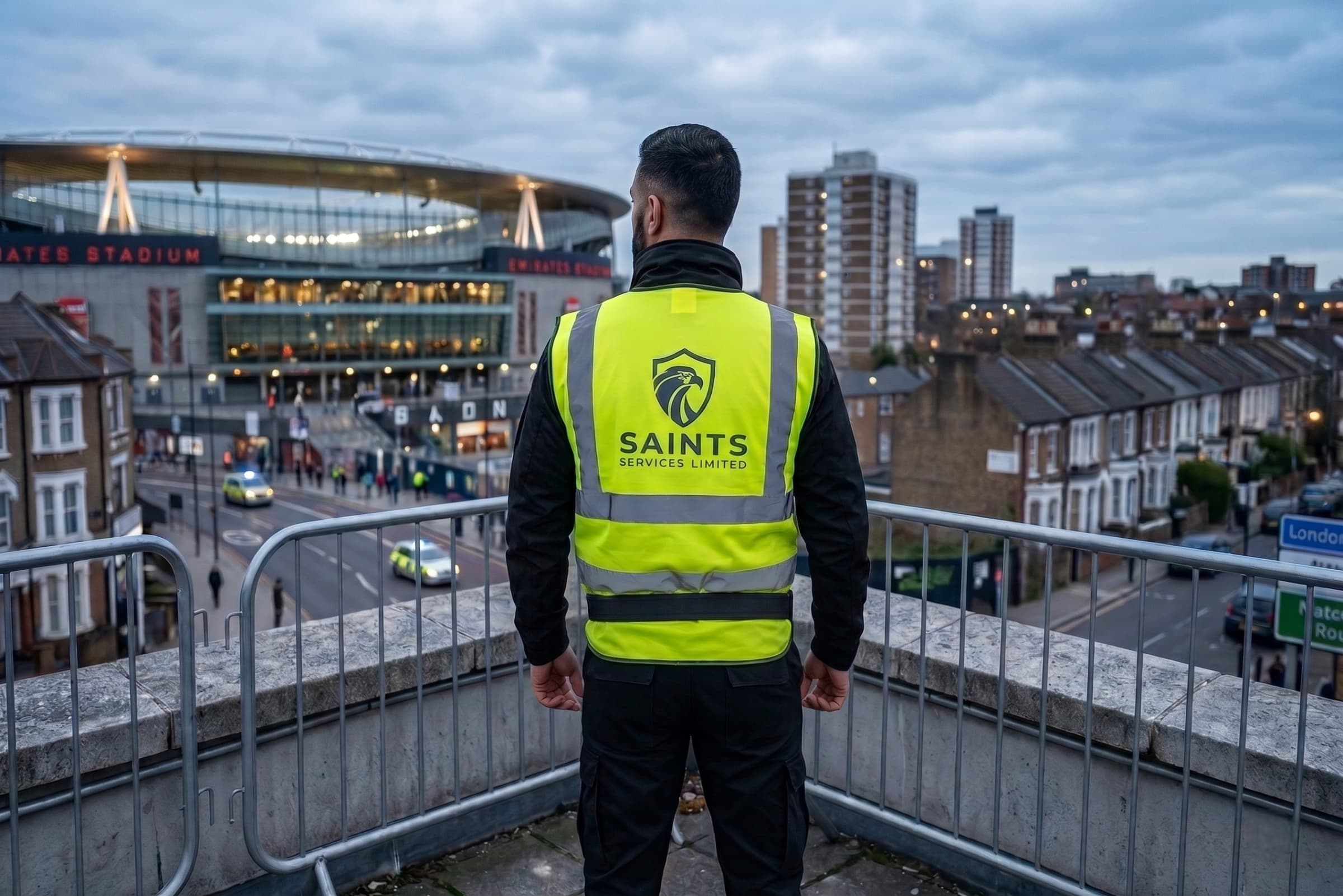
Managing crowd dynamics across major UK sports grounds requires a sophisticated blend of proactive searching, physical fan segregation, de-escalation, and strict statutory compliance.
UK Football Disorder & Home Office Data Trends
According to official football-related arrest and disorder statistics published annually by the UK Home Office, over 2,200 football-related arrests were recorded across England and Wales in recent seasons. Public disorder, pyrotechnic possession, violent behaviour, and alcohol-fuelled offences continue to pose significant operational challenges for stadium operators and local Safety Advisory Groups (SAG).
Home Office data shows more than 2,200 annual football-related arrests, with public disorder accounting for roughly 38% of offences, over 200 pyrotechnic-related incidents, and 600+ banning orders issued each season.
High-profile venues hosting tens of thousands of spectators require structured manned guarding protocols to prevent disorder, safeguard players and officials, and ensure compliance with the Football Spectators Act 1989.
Pyrotechnics, Pitch Invasions & Alcohol Offences
Modern stadium operations face three major threat vectors that require active physical intervention:
- Pyrotechnic flares and smoke bombs: illegal smuggling of high-heat flares into packed stands poses extreme burn and lung-inhalation hazards.
- Pitch incursions: individual or mass spectator runs onto the playing field threaten athlete safety and cause severe match stoppages.
- Concourse anti-social behaviour: excessive alcohol consumption in concourse bar zones leads to verbal abuse, vandalism, and physical fights.
5 Pillars of Active Stadium Manned Guarding
Professional event security deployment relies on multi-layered operational tactics executed across matchday shifts:
- Outer perimeter access control & turnstile searches: operating outer search arches and turnstile entry lanes to detect prohibited items, pyrotechnics, alcohol, and weapons before entry into concourses.
- Away fan segregation & corridor shielding: managing physical buffer zones between home and away supporter blocks, preventing confrontations across concourses and exit gates.
- Pitch perimeter protection & incursion prevention: positioning SIA safety officers along the touchline to deter unauthorised pitch invasions and protect players, officials, and coaching staff.
- Control room CCTV integration & spotting: monitoring high-definition PTZ camera networks alongside police spotters to identify ringleaders, pyrotechnic ignition, and disorder hotspots.
- Post-match dispersal & transport choke points: guiding departing supporters safely through exit turnstiles toward local transport hubs while preventing localised public order incidents.
Turnstile Search Protocols & Prohibited Items
The outer perimeter search line is the primary barrier preventing dangerous items from entering spectator stands. SIA-licensed security guards conduct thorough bag searches and body wands at entry turnstiles.
Search teams confiscate alcohol, glass bottles, pyrotechnic canisters, mega-phones, and offensive banners while ensuring smooth throughput so entry queues do not become dangerous crowd choke points outside venue gates.
Safety Stewards vs. SIA Door Supervisors
Understanding the regulatory distinction between general safety stewards and SIA badge holders is essential for licensing compliance under the Green Guide:
- General safety stewards (NVQ Level 2): responsible for customer service, seat guiding, monitoring aisle clearways, and assisting general evacuations. They do not perform physical restraint or search duties.
- SIA licensed security guards / door supervisors: authorised for bag searches, physical interventions, managing ejected individuals, responding to violent disorder, and protecting pitch boundaries.
Martyn's Law Compliance for High-Capacity Venues
All sports stadiums with capacities exceeding 800 people fall directly into the Enhanced Tier of Martyn's Law (Terrorism Protection of Premises Act).
Venue controllers must maintain documented counter-terrorism risk evaluations, establish rehearsed evacuation and invacuation protocols, conduct physical search wands at turnstiles, and ensure security teams complete official Action Counters Terrorism (ACT) training modules.
Do stadium security guards require an SIA licence in the UK?
Yes. Security personnel performing search duties, physical interventions, pitch boundary protection, or alcohol enforcement at UK sports grounds must hold a valid SIA Door Supervision or Security Guarding licence.
What is the penalty for carrying pyrotechnics into a UK stadium?
Under the Sporting Events (Control of Alcohol etc.) Act 1985, possessing pyrotechnics (flares, fireworks, smoke bombs) at a sports ground is a criminal offence carrying mandatory football banning orders and potential prison sentences.
How do security guards prevent pitch invasions?
Security providers deploy trained SIA officers along pitch perimeter lines during high-risk fixtures, using physical positioning, rapid intercept protocols, and close coordination with CCTV control rooms.